Choosing materials for the interior is a balance between aesthetics, practicality and budget. Today, the most popular solutions are large-format porcelain stoneware, quartz agglomerate and acrylic solid surface. To understand which surface is ideal for your home, it is worth comparing their composition and functionality in real-life conditions in detail.
Composition and production technology: the basis of durability
Before making a choice in favor of a particular material, you need to understand what it consists of and how safe it is for daily contact.
Quartz stone consists of crushed quartz bound with polymer resins, which provides it with high hardness, stability and moisture resistance.
Acrylic solid surface is a material based on acrylic resins with mineral fillers, which, due to its thermoplasticity, is easily molded, but is softer than other types of materials.
Porcelain stoneware is made by pressing a mixture of purified clay, quartz and spar. During firing at temperatures above 1200 °C, an extremely dense and durable environmentally friendly material is formed. Due to its production technology, porcelain stoneware is one of the most stable solutions for modern interiors, where durability and ease of care are important.
Comparison of properties in daily use
To choose the ideal material, it is necessary to compare the technical parameters and features of operation in everyday conditions, namely:
Design and integration into the interior
The main feature of acrylic solid surface is its thermoplasticity. This property allows you to create unique seamless products of various shapes and sizes. Quartz agglomerate is usually chosen because of its strength and exceptional similarity to natural stone, which combines natural beauty with high wear resistance.
Large-format porcelain stoneware is durable and allows you to create complex integrated solutions – for example, sinks or kitchen islands. Keralini FULL BODY porcelain stoneware takes aesthetics to a new level: thanks to the through-the-edge pattern, the need for edging of the ends disappears. This allows you to create the effect of natural integrity.
Application of materials: kitchen, bathroom and other rooms
In the kitchen, all three materials are used for countertops, aprons and sinks. Porcelain stoneware withstands moisture and temperature changes best. Acrylic solid surface is more suitable for work surfaces where there is no intense heating. In the bathroom, moisture resistance and hygiene play a key role: large-sized porcelain stoneware and quartz stone are well suited for walls, window sills and shower areas, while acrylic is more often used in decorative elements.
An important advantage of porcelain stoneware is its versatility: it is the only material among the presented ones that can be confidently used for exterior decoration. Due to its resistance to ultraviolet and frost, it is ideal for facing facades, terraces or open summer kitchens.
The choice of a specific material depends on the priorities of your project. However, if you are looking for a solution without compromising on aesthetics and durability, Keralini large-format porcelain stoneware will be the most versatile investment. It combines the best properties, guaranteeing a flawless interior look both inside and outside the home for decades.
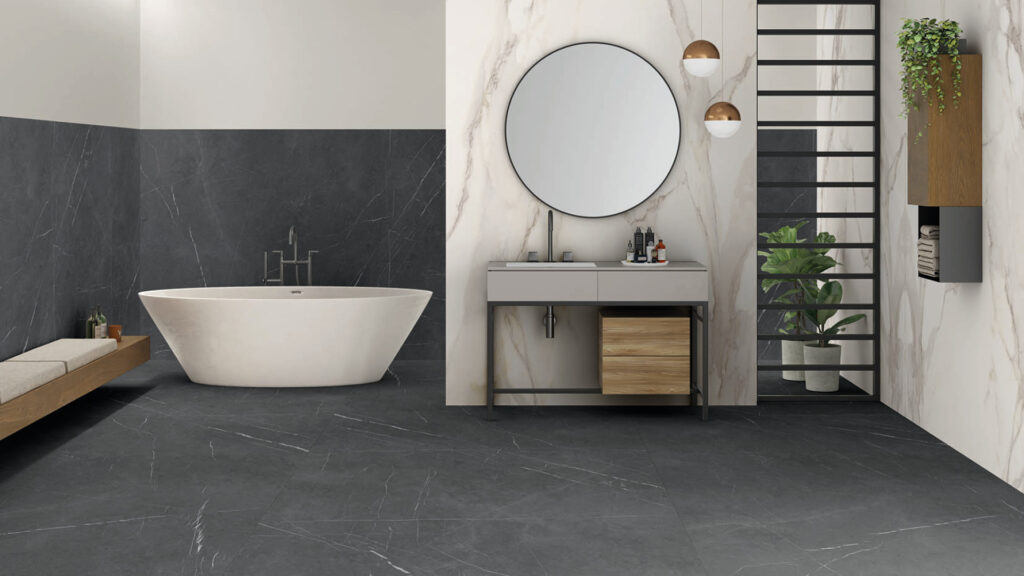
Modern interior design is increasingly based on the principles of minimalism, surface integrity and practicality of materials. In response to these requests, the popularity of large-format solutions is growing, allowing to reduce the number of seams on products and create a visually monolithic space. Keralini porcelain slabs are just such, combining aesthetics and practicality in […]
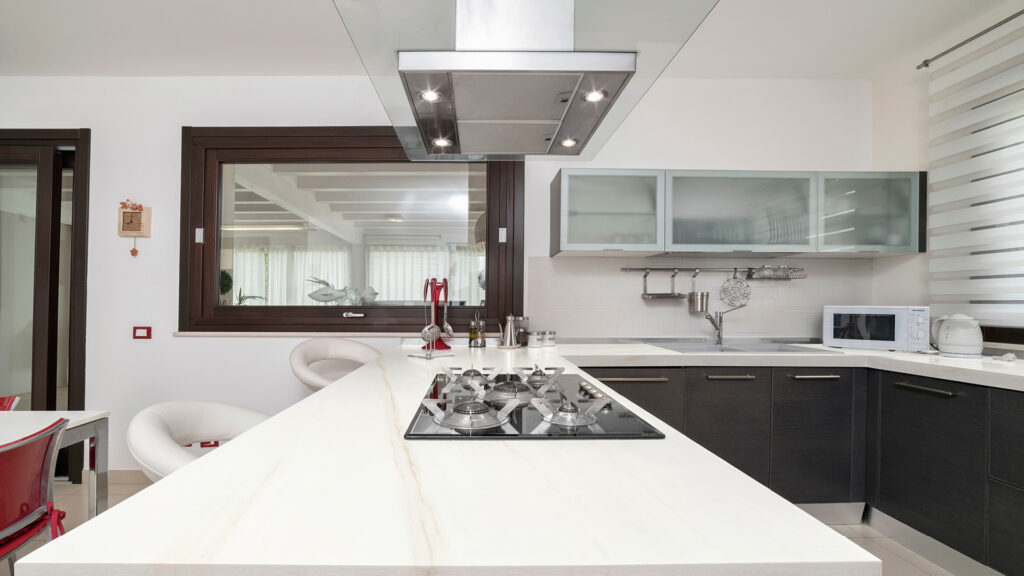
Porcelain stoneware is valued for its durability, moisture resistance and ability to maintain a neat appearance for a long time, even in an area of active use. However, any surfaces in the kitchen require systematic care and proper cleaning. A porcelain stoneware kitchen countertop will remain aesthetic and practical for years if you follow a […]